

If you already know you want a Free Zone company in the UAE, your next problem is more specific.
Which free zone is the best fit for your activity, visa plan, banking readiness, and budget style?
This hub compares four popular options:
- DMCC (Dubai)
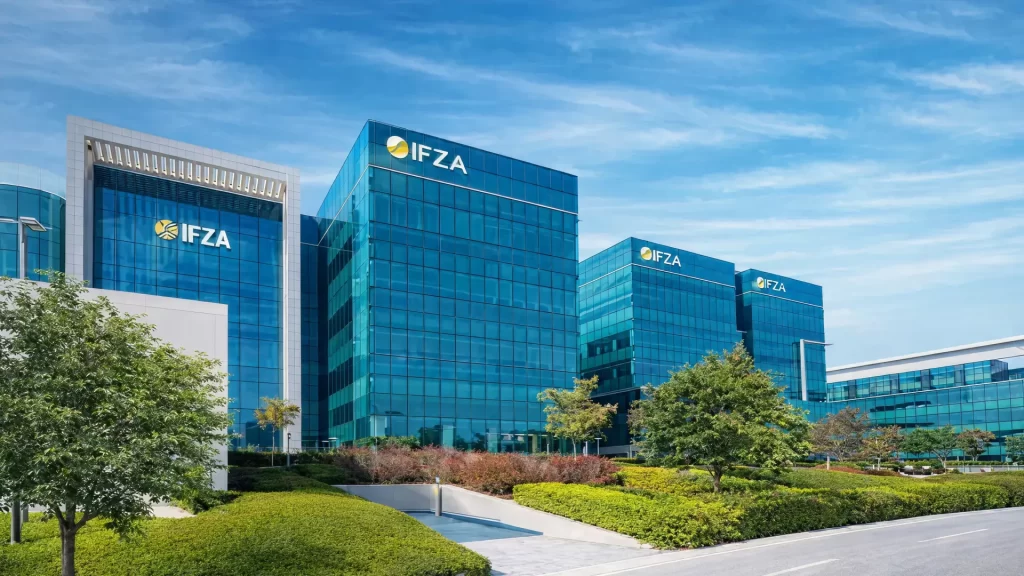
- IFZA (Dubai)
- RAKEZ (Ras Al Khaimah)
- SHAMS (Sharjah)
Important context: these options are not all in the same emirate. That is not a deal breaker. Many people live in Dubai and incorporate in another emirate. Think of it like where you live versus where your business is registered. You can still build a serious operation either way.
That said, the emirate can affect practical details like meeting schedules, office logistics, courier routines, and how often you need to be physically present. So, we will not pretend location is irrelevant. We will just keep it in the right place: a practical factor, not the whole decision.
One more reality check before we start. There is no universal “best” Free Zone. The right answer depends on your year-one plan. If someone says, “Zone X is the best,” what they really mean is “Zone X was the best for my plan.” Your goal is to pick a zone that supports how you operate, how you hire, and how you get paid, without creating avoidable upgrades later.
1) Who this hub is for
This page is for you if:
- you want a UAE Free Zone setup and you are comparing options seriously
- you care about getting operational, not just getting a licence
- you want predictable planning around visas, office, and banking readiness
- you want to avoid “cheap now, expensive later” surprises
This page is not for you if:
- you are still deciding between Mainland and Free Zone
- you need onshore UAE trading or heavy onsite UAE contracting from day one
If you are still unsure between Mainland and Free Zone, use your Mainland vs Free Zone decision framework first, then return here to choose a Free Zone.
Skimmer note: if you are an established entrepreneur and you already have a clear operating model, website, contracts, and clean documentation, you can skim the explanatory lines and spend more time on the comparison table, deep dives, scenarios, and costs.
2) Comparison table: DMCC vs IFZA vs RAKEZ vs SHAMS
Use this table as your decision engine. It is designed to keep you out of the “marketing claim loop.” In plain English, it helps you compare the zones on the things that actually affect operations.
| Factor | DMCC | IFZA | RAKEZ | SHAMS |
| Emirate | Dubai | Dubai | Ras Al Khaimah | Sharjah |
| Best for | Businesses prioritizing premium ecosystem and office options in Dubai | Dubai setup with broad activity choice and practical packages | Cost-conscious setups and flexible facilities, including trading and industrial options | Lean entry packages and simple licensing choices geared to entrepreneurs and creatives |
| Office options | Flexi desk, serviced offices, private office space | Office solutions depend on package and plan | Flexi facilities, private offices, warehouses available | Options vary by package, often designed for lean starts |
| Visa scaling logic | Visa quota tied to office size and workspace type | Visa package and office solutions bundled via proposal | Visa and facility selection go together | Visa allocations depend on package and licensing |
| Activity fit approach | Structured licence types with approved activities list | Large activity list and in many cases multiple activities under one licence | Multiple licence types including e-commerce and general trading | Licensing options include trading and other categories |
| Cost positioning | Typically premium compared to low-cost zones, wide fee range | Often positioned as cost-effective for Dubai | Typically cost-effective, with entry packages and SME bundles | Very competitive entry pricing for basic packages |
| Who should avoid | If minimum cost is the only priority and you do not need premium footprint | If you need a premium ecosystem brand signal from day one | If you need a Dubai-based premium footprint immediately | If you need advanced premises or premium ecosystem positioning immediately |
| Biggest success factor | Office and visa planning aligned early, clean banking narrative | Accurate activity selection and package fit | Choosing the right facility tier and visa plan | Choosing the right licence category and package for visas and scope |
Keep reading for zone-by-zone detail and scenario-based recommendations.
3) DMCC deep dive
DMCC is one of the best-known Dubai Free Zones. In practical terms, DMCC often signals structure, governance, and a stronger ecosystem feel, especially if your plan includes a team, office scaling, or client-facing credibility.
If you are anxious about doing this “the right way” and you want predictable rules, DMCC can feel reassuring. It is not the cheapest route, but it can be a clean route when you value stability and long-term footprint.
What DMCC is best for
DMCC is often shortlisted if you want:
- a strong Dubai ecosystem positioning
- office options ranging from flexi desks to private offices
- structured licensing options and clearer governance
- a scalable footprint inside Dubai
DMCC itself describes that companies must have a registered business address within the free zone. Office size requirements can depend on visa plans, with options ranging from flexi desks to serviced offices and private office space.
A simple analogy: DMCC can feel like choosing a well-managed building where upgrades are clear. You might start with a smaller unit, but you know what it takes to move into a bigger one.
DMCC licensing fit (high level)
DMCC commonly offers licence categories such as:
- service
- trading
- industrial
Instead of thinking about licence labels, think about the kind of business you are actually running day to day.
In DMCC, you typically see businesses like consulting firms, management advisors, commodities traders, import-export companies, tech services firms, family offices, and mid-sized trading setups that care about credibility and long-term presence in Dubai.
If your work involves client contracts, structured services, recurring invoices, or regulated trading flows, DMCC usually makes sense because the licence structure and governance support that style of operation.
A simple way to sanity-check this is to ask yourself: does my business look like something that needs a proper office, predictable visa scaling, and a clean story for banks and counterparties? If the answer is yes, you are thinking in the right direction for DMCC.
This approach saves far more time than trying to reverse-fit your business into a licence name later.
Visa scaling reality at DMCC
At DMCC, visa eligibility is explicitly tied to workspace selection. DMCC also publishes examples of visa quotas by workspace type.
This is helpful because it creates a predictable planning model:
- If you want more visas, you plan a workspace upgrade path.
- If you want minimal visas, you can often start lean and scale later.
Where people get stuck is when they choose a package first and only later realise the visa limits do not match the hiring plan. Treat visas and workspace as one decision, not two separate decisions.
DMCC cost planning ranges
DMCC has publicly stated that licence costs can range widely depending on licence type and activity.
For planning, treat DMCC as a wider-band option:
- licence cost can sit in a broad annual range
- office and leasing choices can become a major driver
- visas and processing add additional layers
Use DMCC when you value ecosystem and long-term footprint enough to accept wider cost variability.
Choose DMCC if
- You want a Dubai premium ecosystem positioning.
- You expect to scale a team and want clear workspace-to-visa logic.
- You want office options that can scale with your company.
Avoid DMCC if
- You want a licence with no meaningful workspace planning.
- You do not benefit from a premium Dubai footprint.
Bridge: if DMCC feels like the “premium, structured Dubai” option, IFZA tends to feel like “practical Dubai setup with flexibility,” especially when activity choice matters.
4) IFZA deep dive
IFZA is, at its core, a practical, activity-first Dubai Free Zone. It is designed for businesses that want a Dubai address without paying purely for prestige, and instead want flexibility in how the licence, activities, visas, and office setup are structured.
In simple terms, IFZA works best for businesses where the operating model matters more than the building you sit in. You commonly see consultants, agencies, SaaS companies, freelancers scaling into teams, e-commerce sellers, and trading-light businesses choosing IFZA because it lets them match the licence closely to how they actually earn money.
If you like the idea of starting with a conversation about what you do, how you get paid, and how many visas you really need, and then receiving a proposal that bundles the right licence, activities, visas, and office solution, IFZA usually fits that mindset well.
What IFZA is best for?
IFZA is often shortlisted if you want:
- Dubai-based free zone incorporation
- a broad range of activities and licence options
- a proposal-driven approach that bundles business activities, visa package, and office solutions
IFZA’s own setup guidance explains that the process typically starts with a consultation to establish requirements, followed by a proposal that outlines the best type of licence, business activities, visa package, and office solutions.
That proposal-driven approach can be useful because it forces alignment early. It reduces the risk of choosing a licence now and discovering later that your visa plan or office needs do not fit.
IFZA licensing fit (high level)
IFZA commonly references two broad licence tracks:
- professional licence for services and consultancy
- commercial licence for trading-oriented activities
Your fit depends on whether you are truly services-first or trading-first, and whether your invoicing and transaction profile match.
A simple way to decide: look at how money will move. If you will mostly receive service fees, retainers, or consulting payments, your profile is likely services-first. If you will buy stock, pay suppliers, then resell products, you are likely trading-first.
IFZA activities: why this matters
A major reason people choose IFZA is the breadth of activity choices. IFZA provides an online activity list tool, which helps validate your business activity selection.
This matters because wrong activity selection is one of the most common causes of:
- licensing clarifications
- invoice scope mismatch
- banking friction later
Banking is where this becomes real. Banks often compare your licence activity, your website positioning, your contracts, and your expected transactions. If those do not match, you get delays.
Think of it like airport security. The licence is your passport. Your documents and story are your boarding pass and itinerary. If they do not match, you get pulled aside.
IFZA cost planning ranges
IFZA does not always present one single universal public price for every scenario in one place. Pricing can depend on package, visa allocation, and promotions.
For planning purposes, business setup providers commonly publish IFZA licence package ranges in the lower to mid bands for Dubai Free Zones. Treat it as a broad range that varies by visa allocation and inclusions.
Choose IFZA if
- You want Dubai incorporation with a practical package structure.
- Your activity selection needs flexibility, including multiple activities under one licence in some cases.
- You want a setup flow that is consultation and proposal driven.
Avoid IFZA if
- You want a premium ecosystem positioning as the core reason for choosing a zone.
- You want one fixed price and a one-size package expectation.
- Your model needs complex premises or specialised facilities from day one.
5) RAKEZ deep dive
RAKEZ is, in simple terms, a value-focused, operations-friendly Free Zone. It is based in Ras Al Khaimah and is designed for businesses that care more about how things work on the ground than about having a Dubai pin code on their address.
You usually see RAKEZ chosen by businesses that expect to handle products, stock, storage, or operational workflows, or by founders who want room to grow without being forced into expensive office upgrades too early. Trading companies, e-commerce brands with fulfilment needs, light industrial setups, and service businesses that may later need space beyond a desk often find RAKEZ a natural fit.
In short, RAKEZ works well when cost control, flexibility, and facility options matter more than brand optics. It is built for businesses that want to operate smoothly first, and polish the footprint later if needed.
What RAKEZ is best for?
RAKEZ is often shortlisted if you want:
- cost-conscious entry
- flexible facilities including shared workstations and larger premises options
- licence types that cover a wide range including e-commerce and general trading
- a practical route for trading, services, and certain operational models
RAKEZ describes facility options like shared workstations, private offices, and warehouses, and provides a range of licence types including commercial, e-commerce, general trading, and industrial.
If you think you may need warehousing or larger premises later, it helps to choose a zone where that upgrade path is clear. Otherwise you might end up with a forced restructure.
RAKEZ licensing fit (high level)
RAKEZ provides a published list of licence types, including:
- commercial
- e-commerce
- general trading
- industrial
- individual or professional
- media
The right fit depends on your real operating model and invoice scope.
A quick practical check for trading models: if you will import, store, or distribute products, you want your activity and documentation ready early. That includes supplier details, product categories, and a clear explanation of who your customers are.
RAKEZ cost planning ranges
RAKEZ publishes promotions and package examples that show:
- entry-level starter packages at a low point
- SME-oriented bundles in the mid bands that include a visa component
- additional variability depending on visas, facilities, and requirements
For planning, many people treat RAKEZ as:
- a strong value option for cost-conscious setups
- a flexible option if you need facilities beyond a basic desk over time
Choose RAKEZ if
- You want strong cost efficiency with the ability to scale facilities.
- You are trading, e-commerce, or services and want flexible licence types.
- You want an option outside Dubai that can still support serious operations.
Avoid RAKEZ if
- You need a Dubai premium footprint as a core requirement.
- Your team requires frequent Dubai-based operational presence and you want everything in one emirate.
- You want to anchor brand positioning specifically to a Dubai premium ecosystem.
Bridge: if you want a low-overhead entry and simple licensing options, especially for a lean start, SHAMS is often shortlisted.
6) SHAMS deep dive
SHAMS is a Sharjah Free Zone that is often shortlisted for lean entry setups. It can be attractive when you want a clear starting point, simpler packaging, and a lower overhead in year one.
The important thing is to be honest about your operating model. SHAMS can be a great entry option, but if you need premium offices, advanced premises, or complex facilities immediately, it may not be the best fit.
What SHAMS is best for?
SHAMS is often shortlisted if you want:
- licensing options that support entrepreneurs, creative businesses, and lean startups
- a digital-first setup approach
- a Sharjah-based option that can be cost-effective
If you are budgeting carefully, that “starting from” transparency can feel calming. Just remember that starting price is not total cost of ownership. Visas, office upgrades, and add-ons change the total.
SHAMS licensing fit (high level)
SHAMS has an official licensing page that describes a trade licence and its scope for activities within SHAMS and for import and export, depending on the licence type and structure.
As with any Free Zone, if your business model involves direct onshore UAE mainland trading, you must plan the correct legal pathway. Do not build a plan that assumes mainland trading is automatic.
SHAMS cost planning ranges
SHAMS publishes entry-level “starting from” prices. For planning, treat SHAMS as:
- a very competitive entry option for lean starts
- a zone where upgrades and visas can expand the cost over time
Choose SHAMS if
- You want a low-overhead entry point and a straightforward licensing choice.
- You are okay operating from Sharjah and do not require a Dubai premium footprint.
- You want clear starting price signals
Avoid SHAMS if
- You need premium office ecosystems or specialised facilities immediately.
- Your brand strategy requires a Dubai premium positioning from day one.
- Your operational model involves complex logistics where you prefer a different facilities profile.
Bridge: now that you have a feel for each zone, the next section helps you shortlist based on your business model and the questions that matter most.
7) Best fit by business model: scenarios
Use these scenarios as shortcuts. Each includes what to confirm so you do not choose based on stereotypes.
Scenario A: Solo consultant, 0 to 1 visa
Shortlist often includes:
- IFZA
- SHAMS
- RAKEZ
Confirm:
- your services activity matches your invoices
- you do not need a premium ecosystem signal
- your banking story is clean: proposals, contracts, consistent positioning
Scenario B: Agency with 1 to 2 hires planned
Shortlist often includes:
- IFZA
- DMCC (if brand footprint matters)
- RAKEZ
Confirm:
- whether you need client-facing office space
- whether your service scope will expand into activities requiring extra approvals
- whether you need more than 2 visas quickly
Scenario C: E-commerce brand selling internationally, UAE later
Shortlist often includes:
- IFZA
- RAKEZ
- SHAMS
Confirm:
- your payment flow narrative (gateway settlements, refunds, chargebacks)
- supplier documentation and fulfilment plan
- whether you plan to sell directly onshore in the UAE soon, and what legal pathway you will use
Scenario D: Trading company with suppliers and distribution
Shortlist often includes:
- RAKEZ
- DMCC (if premium footprint and ecosystem matter)
- IFZA (if Dubai route and activity fit is strong)
Confirm:
- product category and whether approvals are required
- whether you need warehouse facilities early
- whether the banking narrative is supported by supplier documents
Scenario E: SaaS business with subscription revenue
Shortlist often includes:
- IFZA
- DMCC (if ecosystem and investor perception matter)
- SHAMS
Confirm:
- invoicing language for subscriptions and services
- where customers are located and how money flows
- whether you need a private office footprint early or later
Scenario F: Corporate shareholder subsidiary
Shortlist often includes:
- DMCC
- IFZA
- RAKEZ
Confirm:
- corporate document readiness and signatory structure
- UBO information and company profile readiness
- bank account requirements and transaction narrative clarity
Scenario G: Founder needs 3 to 5 visas in year one
Shortlist often includes:
- DMCC
- IFZA
- RAKEZ
Confirm:
- workspace-to-visa linkage and upgrade path
- costs that scale with visas
- your office plan over the next 12 months
Scenario H: Budget-sensitive founder focused on renewal predictability
Shortlist often includes:
- SHAMS
- RAKEZ
- IFZA
Confirm:
- what is included in the first year
- what changes at renewal
- add-ons for visas, extra activities, and office upgrades
8) Common traps to avoid
Trap 1: Choosing the cheapest headline price, then upgrading under pressure
A low headline price can become expensive when you add visas, office upgrades, extra activities, approvals, and amendments.
Choose based on your year-one operating plan, not the entry price.
Trap 2: Adding too many activities “just in case”
Too many activities can create approval complexity, invoice confusion, and banking questions.
Pick one primary activity tied to your revenue. Add only real supporting activities.
Trap 3: Assuming any free zone lets you trade onshore freely
Dubai’s official guidance notes that free zone companies cannot trade directly within the UAE mainland unless they obtain the relevant licence or establish a mainland branch through the required pathway.
If you will sell onshore, plan your legal pathway early.
Trap 4: Treating banking as automatic
Banking readiness is about consistency, documentation, and transaction narrative. A licence helps, but it does not eliminate banking reviews.
Trap 5: Ignoring the workspace-to-visa relationship
In many free zones, visas and workspace are linked. If you choose a package that cannot scale with your visa plan, you create a forced upgrade later.
Why Consultycs?
Free zone selection is easy to sell and easy to get wrong. We focus on fit and execution.
- Activity-first matching
We start with your real deliverables and invoice scope, then match zones that support the activity cleanly.
- Visa and workspace planning aligned
We align your visa plan to a workspace path so you do not get forced into upgrades mid-process.
- Banking readiness in parallel
We help you create a bank-ready narrative that matches the licence activity, website positioning, and transaction profile.
- Transparent ranges and line-item clarity
You get planning ranges and the drivers behind them, so you can make a decision with eyes open.
- Execution support beyond licence issuance
We plan for operational milestones, not just the licence document.
FAQs
Which free zone is best overall?
There is no universal best. The best choice depends on your activity, visa plan, workspace needs, banking urgency, and budget style.
Are DMCC and IFZA both in Dubai?
Yes. RAKEZ is in Ras Al Khaimah and SHAMS is in Sharjah. Your location preference matters for practical operations, but you can still live in Dubai and incorporate elsewhere.
Which free zone is best for consulting?
Often IFZA, SHAMS, and RAKEZ are shortlisted for lean consulting setups. DMCC is shortlisted when premium footprint matters.
Which free zone is best for trading?
RAKEZ is commonly shortlisted for cost-conscious trading setups and facilities. DMCC can be shortlisted when premium Dubai footprint matters. Always validate activity, approvals, and banking readiness.
Which free zone is best for e-commerce?
IFZA, RAKEZ, and SHAMS are commonly shortlisted for lean e-commerce starts. The deciding factor is your payment flow and documentation readiness.
Can a free zone company sell in the UAE mainland?
Free zone companies cannot trade directly in the UAE mainland without the relevant mainland licensing pathway. Plan the correct structure if onshore selling is part of your model.
How many visas can I get?
Visa eligibility depends on your package and workspace tier. Some zones tie visa quotas to office size and workspace type. Plan your year-one visa count before selecting a package.