

If you search online for the “best free zone in the UAE,” you will find confident answers everywhere. Lists, comparisons, rankings, and price tables. What most of them miss is a simple truth.
There is no universal best free zone.
What actually exists is the best fit free zone for your business model, your payment flow, your hiring plan, and how fast you need to become fully operational.
Most founders do not fail because they chose the wrong authority. They struggle because they chose a licence that looked fine on day one, but did not hold up once banking, visas, invoicing, and renewals entered the picture.
This guide keeps the structure simple and practical. Instead of starting with free zone names, it starts with how your business really operates and then maps that to the type of free zone setup that fits.
Before getting into specific business models and zone names, it helps to step back and understand how free zones are broadly structured. Once you know which type of setup fits your operating style, shortlisting the right authority becomes far more straightforward and far less overwhelming.
1. The four free zone types that matter more than brand names
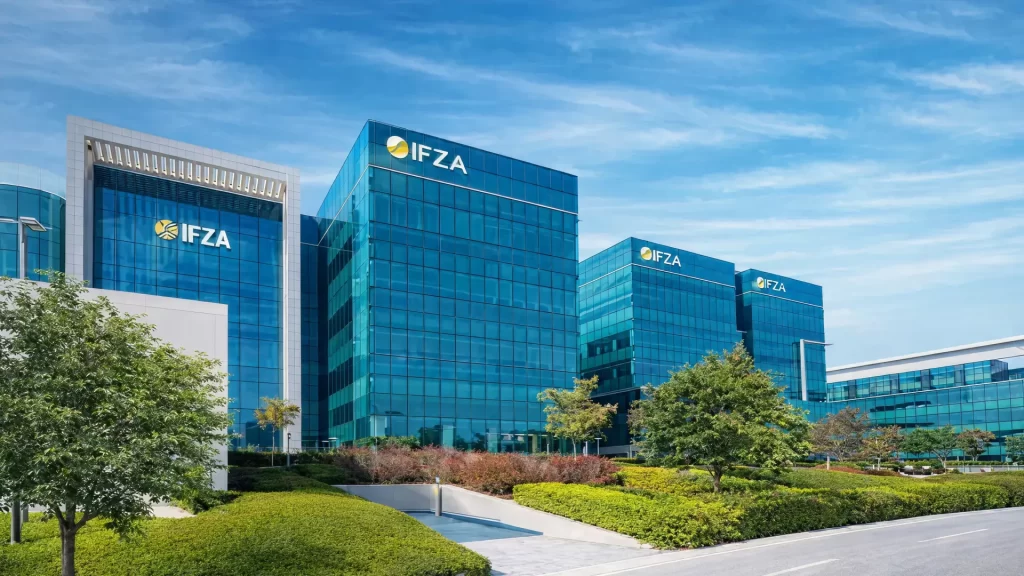
Before comparing individual free zones, it helps to understand the type of setup your business needs and what different free zones are broadly known for. For example, some zones like DMCC are known for premium Dubai footprint, strong office ecosystems, and enterprise credibility. Others like IFZA are known for flexible activity groupings and practical setups for service and tech businesses. Zones such as SHAMS are commonly used for lean, cost efficient starts in media, creative, and solo founder models, while zones like RAKEZ are often shortlisted for trading, industrial, and facility oriented businesses. Once you know both the setup type and the zone positioning, shortlisting becomes far more logical. In practice, most founders fall into one of four categories.
Type 1: Lean Launch
Best when you are remote first, need zero to one visa in year one, want low overhead, and need a clean and simple licence scope.
This suits solo founders, freelancers, and early stage businesses testing traction.
Type 2: Scalable Team
Best when you need one to five visas in year one, expect hiring, and want predictable rules for workspace and visa upgrades.
This is the most common category for growing service and tech businesses.
Type 3: Premium Footprint
Best when office optics matter. This applies when clients, partners, or investors care about where you are based and how you present yourself.
This is a strategic choice, not a requirement for most businesses.
Type 4: Facilities Required
Best when you need warehouses, industrial space, or specialised facilities from day one or very soon.
Trading, manufacturing, and logistics heavy businesses usually fall here.
Once you know your type, shortlisting becomes faster and far less confusing.

2. Best free zone fit for Consulting and Professional Services
What this model actually needs
Consulting businesses do not lose momentum because they are complex. They lose momentum because of ambiguity.
Your licence, contracts, invoices, and bank narrative all need to describe the same thing in simple language. When founders choose vague activities to keep options open, it usually backfires.
Invoices become unclear, client onboarding slows down, banks ask more questions, and amendments become more likely.
Best fit free zone type
Most consulting firms fit into either:
- Lean Launch for solo consultants with zero to one visa
- Scalable Team for firms planning one to three visas
Premium footprint is optional and should only be chosen if it serves a clear business or client facing purpose.
Commonly suitable free zones (by intent)
Instead of asking for the best consulting free zone, it helps to shortlist by intent.
If your priority is a lean start with low overhead and fast setup, founders commonly look at IFZA, SHAMS, and RAKEZ. These zones work well for solo consultants and small teams where the scope is clearly defined and operations are remote first.
If your priority is Dubai based incorporation with flexibility to combine closely related consulting or professional service activities under one licence, IFZA is often shortlisted due to its activity grouping flexibility.
If your priority is premium client optics, office ecosystem, and investor familiarity, founders commonly shortlist DMCC or similar premium Dubai free zones. This choice makes sense when clients or partners expect a strong Dubai footprint.
What to confirm before choosing
- Activity and invoice scope
Write ten invoice line items you expect to use. If they do not read cleanly under the proposed activity, the activity is wrong.
- Visa plan
If hiring is likely, choose a zone with a workspace path that scales with you.
- Banking narrative
Prepare a simple company profile, a sample contract or proposal, and a clear explanation of how you get paid.
Best practice
Consultants should optimise for clean scope, predictable renewals, and low banking friction before optimising for entry price.
3. Best free zone fit for Agencies and Marketing Services
What this model actually needs
Agencies often run into trouble because their licence says consulting while their transactions look like advertising spend.
Most agencies operate in one of two ways. Some charge fees only, with clients paying vendors directly. Others manage client funds and pay third parties.
These are not the same operational stories. Managed spend models require stronger documentation, clearer contracts, and a more detailed banking narrative.
Best fit free zone type
- Lean Launch for solo agencies with fee only models
- Scalable Team for agencies planning one to five visas
- Premium Footprint when client facing office optics matter
Commonly suitable free zones (by intent)
For fee only agencies with small teams and low overhead goals, founders commonly shortlist IFZA, SHAMS, and RAKEZ due to their service activity support and scalable visa paths.
For agencies offering multiple related services under one brand such as performance marketing, creative, and strategy, IFZA is often shortlisted because it allows combining related service activities under one licence structure.
For agencies that require strong Dubai optics, physical office presence, and enterprise client comfort, DMCC is commonly shortlisted, provided the higher office and renewal costs are planned for.
What to confirm before choosing
- Commercial model clarity
Be explicit about whether you manage client spend or operate on a fee only basis.
- Activity set discipline
Avoid adding unrelated activities just to feel flexible.
- Transaction profile
Frequent small payments require a clearer banking narrative than a few monthly retainers.
4. Best free zone fit for Trading and General Trading
What this model actually needs
Trading businesses are not difficult, but they are documentation heavy. Product category clarity, supplier readiness, shipping logic, and clean purchase and sales documentation all matter.
If your model involves selling directly into the UAE mainland, the correct licensing pathway must be planned early instead of assumed later.
Best fit free zone type
- Facilities Required when warehousing or industrial space is needed
- Scalable Team for businesses starting lean but planning rapid growth
- Premium Footprint only when brand optics justify the cost
Commonly suitable free zones (by intent)
For trading businesses that need warehouses, industrial units, or logistics infrastructure, founders commonly shortlist RAKEZ and similar emirate level zones that openly provide facility options.
For general trading setups that start lean and scale into warehousing later, IFZA and SHAMS are often shortlisted for initial setup, provided the upgrade path is clearly mapped.
For trading businesses where a Dubai address and ecosystem visibility matter, DMCC is sometimes shortlisted, but costs, office requirements, and approvals must be planned carefully.
What to confirm before choosing
- Product category and approvals risk
- Warehouse availability and upgrade path
- Banking readiness including supplier documents, pro forma invoices, and logistics flow
5. Best free zone fit for E-commerce and Online Selling
What this model actually needs
E-commerce businesses are defined by payment flow, not by the website itself.
Banks and payment providers will focus on where customers are, how money arrives, how refunds are handled, and how fulfilment works.
Founders often choose overly broad activities and then struggle with payment processors and account approvals.
Best fit free zone type
- Lean Launch for early stage testing with zero to one visa
- Scalable Team for planned growth
- Facilities Required when warehousing becomes core
Commonly suitable free zones (by intent)
For early stage e-commerce testing with low overhead, founders commonly shortlist IFZA, SHAMS, and RAKEZ due to their e-commerce activity support and starter packages.
For e-commerce businesses planning Dubai based operations with stronger brand optics, DMCC can be suitable if office and cost requirements align with the plan.
For sellers planning warehousing and logistics at scale, zones like RAKEZ become relevant once facilities are required.
What to confirm before choosing
- Supported e-commerce activity
- Payment gateway and settlement readiness
- Onshore selling timeline
6. Best free zone fit for SaaS and Software Businesses
What this model actually needs
SaaS businesses typically have subscription revenue, cross border customers, and minimal physical operations.
The most common mistake is mixing too many unrelated activities and weakening the banking narrative.
Best fit free zone type
- Lean Launch for solo founders and remote teams
- Scalable Team for hiring plans
- Premium Footprint when enterprise clients or investors value Dubai optics
Commonly suitable free zones (by intent)
For early stage SaaS founders prioritising speed and cost efficiency, IFZA and SHAMS are commonly shortlisted.
For SaaS businesses that want flexibility to combine software development with closely related services, IFZA is often shortlisted due to activity grouping flexibility.
For SaaS companies working with enterprise clients or investors who value a strong Dubai presence, DMCC is commonly shortlisted when budgets and office requirements support it.
What to confirm before choosing
- Subscription invoice language
- Cross border receipt explanation
- Visa scalability and workspace upgrade path
7. Holding companies and IP holding setups
This section is intentionally high level. Holding structures can have legal, tax, and compliance implications that depend on what you hold and how you operate.
What this model actually needs
A holding style entity usually needs:
- a precise scope statement of what it holds, such as shares, intellectual property, or specific assets
- low operational complexity but high documentation clarity
- strong KYC readiness
- a banking narrative that explains low transaction volume or specific transaction types
A common mismatch looks like this. A founder says they want a holding company, but they also plan to do active trading or active services. That is no longer a pure holding entity. It is a mixed model and it should be licensed as an operating business, not treated like a passive holdco.
Best fit free zone type
- Scalable Team if you will also have operating activity or staff in the UAE
- Premium Footprint if governance optics matter for investors, group companies, or board level comfort
- Lean Launch can work only when the structure is simple and the authority clearly supports the holding scope
Commonly suitable free zones (by intent)
Holding structures are case dependent, so this is not a recommendation. It is a shortlisting pattern founders commonly use.
If your priority is a stronger Dubai optics story for group structuring, investor conversations, or partner comfort, founders commonly shortlist DMCC.
If your priority is a clean setup with flexibility to align activities, and your scope is supported by the authority, founders often shortlist IFZA.
If your priority is cost efficiency and you have a simple holding story, founders sometimes shortlist emirate level options such as RAKEZ, but only after confirming the permitted holding scope.
What to confirm before choosing
- Does the authority support your intended holding scope
Do not assume. Validate the permitted activity and wording.
- Pure holding or operating
If you will invoice for services or trade goods, pick the proper operating activity first, then structure holding logic with professional advice.
- Bank expectations
Banks will usually ask why you need the entity, source of funds, and expected transaction profile. If you cannot explain that in two clear paragraphs, pause and refine your structure.
8. Industrial, Manufacturing, and Facilities heavy businesses
These setups shortlist faster than most because the requirement is concrete. You either need a warehouse, an industrial unit, specialised facilities, or you do not.
What this model actually needs
Facilities heavy businesses usually require:
- an industrial or commercial licence type that matches the operation
- warehouse or industrial unit availability
- import, export, and logistics planning that is coherent on paper
- staff visas aligned to facilities and shifts
Best fit free zone type
Facilities Required, almost always.
Commonly suitable free zones (by intent)
If you need warehouses and industrial options, founders commonly shortlist zones that publish industrial licence types and offer facilities. RAKEZ is frequently shortlisted because it clearly lists industrial and commercial licence types and is known for facility oriented options.
If you want to keep facilities cost efficient, some founders choose a facilities focused zone outside Dubai and then manage Dubai commercial presence through the correct pathway, rather than forcing a desk package in a premium zone.
What to confirm before choosing
- Facility availability and lease logic
Do not choose a desk package if you will need a warehouse within months.
- Customs and logistics flow
Document your import and export plan at a high level before you commit.
- Staffing plan
Facilities heavy operations usually mean more visas. Ensure your visa allocation and upgrade path match your hiring plan.
9. Media, Creative, and Freelancer style setups
Creative businesses usually want two things that can feel contradictory. They want a clean licence scope, and they want to stay lean on overhead.
What this model actually needs
- a clear media or service licence category that matches what you invoice for
- a low overhead entry path
- simple scope and invoice clarity
- sometimes a freelancer permit style approach depending on the authority
Best fit free zone type
Lean Launch is the common fit here.
Commonly suitable free zones (by intent)
If your priority is low overhead and a straightforward start, founders commonly shortlist SHAMS for media and creative style packages.
If you want a broader activities list to cover creative services under a coherent scope, founders also shortlist IFZA.
If your business needs premium client optics, studio or office ecosystem presence, or you work with brands that care about footprint perception, DMCC can be shortlisted, but only if the costs and workspace requirements make sense.
What to confirm before choosing
- Activity list fit
Choose activities that match what you invoice for. If you have to twist wording on invoices, your scope is wrong.
- Visa needs
If you plan to remain solo, zero to one visa is often sufficient. If you plan to scale, choose a zone with a clear upgrade path.
10. Corporate subsidiaries and multi shareholder structures
Corporate shareholder structures are usually not hard, but they are documentation driven. The free zone choice matters less than your readiness pack.
What this model actually needs
Expect additional requirements such as:
- corporate documents for the shareholder entity
- signing authority proof
- UBO information
- more verification steps depending on the authority and the bank
Best fit free zone type
- Scalable Team if you will hire locally and need a practical visa path
- Premium Footprint if governance optics matter for group entities
- Facilities Required if you are operational heavy
Commonly suitable free zones (by intent)
If governance optics and Dubai footprint matter, founders commonly shortlist DMCC.
If your structure needs flexible activity grouping under a coherent scope and you want a practical setup flow, founders often shortlist IFZA.
If your priority is cost efficiency and the operating model is straightforward, founders sometimes shortlist emirate level zones such as RAKEZ, assuming documentation and banking readiness are strong.
What to confirm before choosing
- Corporate document readiness
Get your corporate pack ready before you commit to a fast setup promise.
- Bank readiness pack
Corporate structures often face higher scrutiny. Prepare your company profile and transaction narrative upfront.
- Who will be present in the UAE and when
Execution timeline depends on visas and practical sequencing. Plan this like a project, not a single step.
11. Mixed business models
Mixed models cause the most wrong choices, and this happens more often than founders realise.
This is the situation. You are consulting, but you also plan to resell software. Or you are building a SaaS product, but you might also do services on the side. Or you run an agency and think you may start selling products later. All of that may be true, but trying to licence everything on day one usually creates more problems than it solves.
A helpful way to think about this is a restaurant menu. You may know how to cook ten cuisines, but your menu still needs a clear focus. If everything is listed, customers get confused and the kitchen struggles. Licences work the same way.
For year one, pick one primary revenue activity. This should be the activity that brings in most of your money and shows up most often on your invoices. Add supporting activities only when they are real, actually invoiced, and easy to defend if a bank or authority asks why they exist.
Here is a simple and very practical test. Open a blank page and write ten invoice line items you realistically expect to issue in year one. Do not make them sound fancy. Write them the way a real invoice would look. If you find yourself stretching language or using vague wording just to make the licence fit, the activity set is wrong.
When in doubt, start narrow. It is almost always easier to add a well justified activity later than to explain a broad and confusing scope after problems show up.
12. Cost and timeline planning using ranges
Free zones should not be compared using a single number. They should be compared using cost layers.
The cost layers that actually change the total
- Licence and registration
- Workspace
- Visas
- Activity add ons
- Renewals and recurring charges
- Changes and amendments risk
A useful way to plan early is to think in bands. Not quotes. Just bands.
Three planning bands most founders can use
Band 1: Lean Launch
- Typically fits zero to one visa, minimal workspace
- Commonly associated with starter style packages in zones like SHAMS, and sometimes entry level pathways in IFZA and RAKEZ, depending on activity
Band 2: Scalable Team
- Typically fits one to two visas, scalable workspace
- Often where IFZA and RAKEZ get shortlisted for practical upgrade paths, and where many founders start comparing against premium options
Band 3: Premium Footprint or higher complexity
- Typically fits private office, three or more visas, premium ecosystem, approvals risk
- Often where DMCC is shortlisted, along with other premium Dubai zones, when footprint optics matter
13. How to compare quotes without surprise fees
Always request like for like breakdowns covering licence, workspace, visas, renewals, and amendments.
Think of this like comparing mobile plans or airline tickets. One looks cheap at first glance, but once you add data, baggage, seat selection, or roaming, the final bill looks very different. Free zone quotes work the same way.
A proper comparison means you are checking the same things side by side. What exactly is included in the licence. What kind of workspace is bundled. How many visas are included now and what happens when you add more. How renewals change year two onwards. And what it costs to make changes later if your business evolves.
If a quote looks too simple or fits neatly into one line, it is usually missing layers. Those layers tend to show up later, when changing becomes expensive or urgent. A slightly longer, more detailed quote upfront is often the safer and cheaper option in the long run. If you want help shortlisting the right free zone for your business model, you can speak to Consultycs. We take a business model first approach, not a cheapest package approach, and help you align licence scope, visas, and banking readiness before problems show up later.
Final takeaway
The right free zone is not the cheapest or the fastest. It is the one that fits how you actually make money, hire people, and get paid, without making your life miserable later.
Think of it like buying shoes online. The lowest price looks amazing, until you realise they pinch, you cannot return them, and you end up buying a second pair anyway. The best choice is the one that fits and lets you walk confidently.
So start with how you operate. What you invoice for. Where your customers are. How money lands in your account. How many visas you need. Once that is clear, the shortlist becomes much easier and you stop feeling like you are picking a free zone by vibes.